It’s starting… or it started. And I have 3 emotions about it:
- Happy
- Curious
- Worried
First, let’s cover Happy and Worried:)
AI creations are getting marked! You can start noticing this on LinkedIn as they introduced Content Credentials.
It looks something like this:
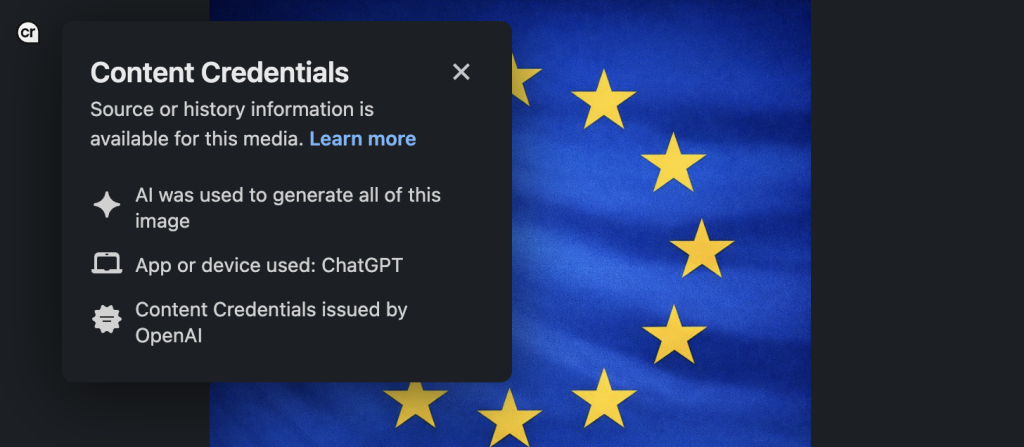
Then, relatively recently, there was a proposal to add HTTP headers clarifying whether the served content/page contains AI-generated content.
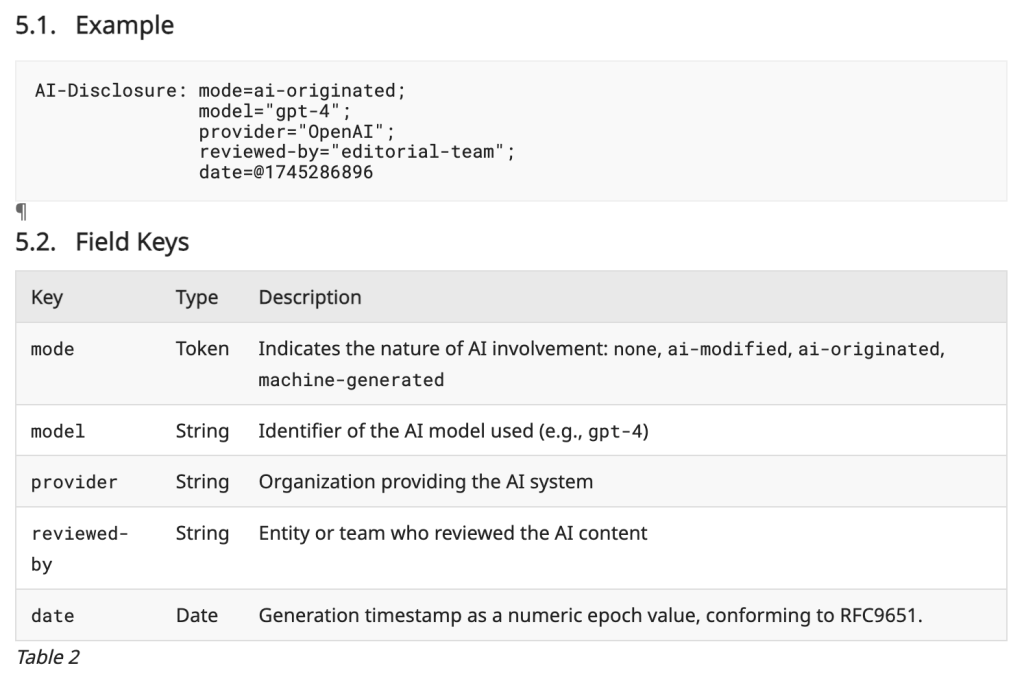
It’s still a proposal, and I’m not sure it’s moving forward much.
We have also lived through a short era of text checkers for AI generation. It was fun, until those checkers confirmed that the Constitution of the USA was written by AI.
We have trained our eyes at this point to spot the AI-generated imagery most of the time, and we sort of can get a sense of whether a chunk of text from someone was generated by AI or written genuinely by them. Our accuracy is not 100% and maybe even not 80%. But we got good at it.
As we try to identify what is genuine human creation and what is AI, we seem to still be confused about what to do in the cases of AI generation.
On one hand, we sell multiple solutions that are based on AI generation. All shapes and forms. Mixed media. Endless use cases.
On the other hand, we also hunt down with pitchforks those who use AI-generated content in some industries. I.e., Clair Obscur case.
On Hacker News, there is a comment from the user nrmitchi with a good point. Here is a piece of the comment and a link to the full one:
Yes, there is a huge problem with AI content flooding the field, and being able to identify/exclude it would be nice (for a variety of purposes)
However, the issue isn’t that content was “AI generated”; as long as the content is correct, and is what the user was looking for, they don’t really care.
This is a cornerstone of the confusion, as it seems to me. AI is still a probabilistic technology with its precision getting better and better; however, knowing that it’s not deterministic, we tend not to give it our full trust.
All above explains my happiness (being able to have a regulatory way of marking human vs. AI) and worry (aren’t we over-regulating? If it’s valuable, then who cares how it was created?).
And now to the case that I’m curious about. It’s the case that’s not yet TRUE. It’s not yet implemented or enforced. But as I observe the developments, emotions, EU’s love for regulations (moats…) – I can see the scenario where marking the AI-generated content becomes a regulation/law.
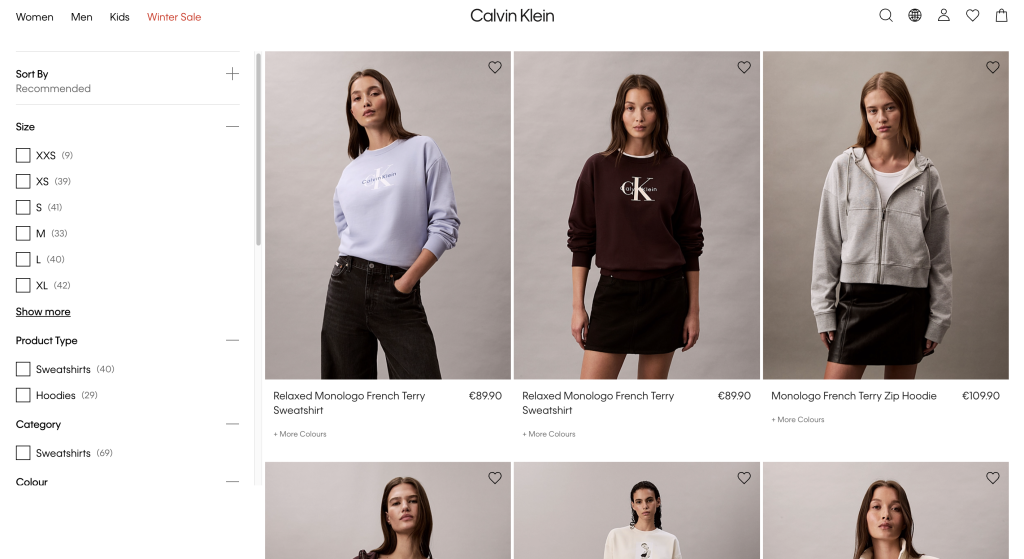
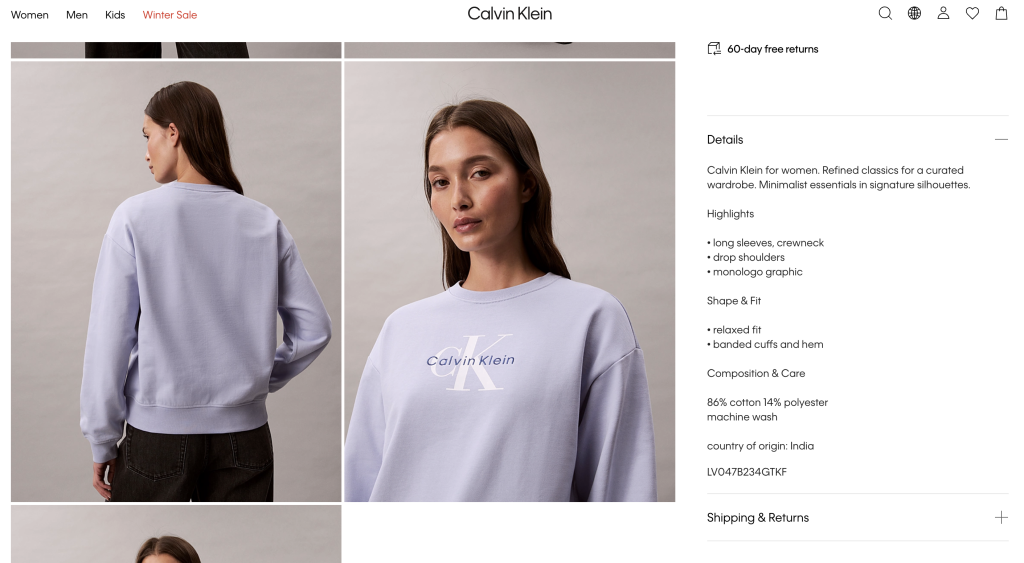
And in that scenario, I’m wondering what it would do to the fashion industry, specifically the e-com part. How would that impact the decision-making of a common consumer?
If today we shop like this:
Review items like this:
But then, with the marking in place, if we get to shop with something like this (AI mark mock-up):
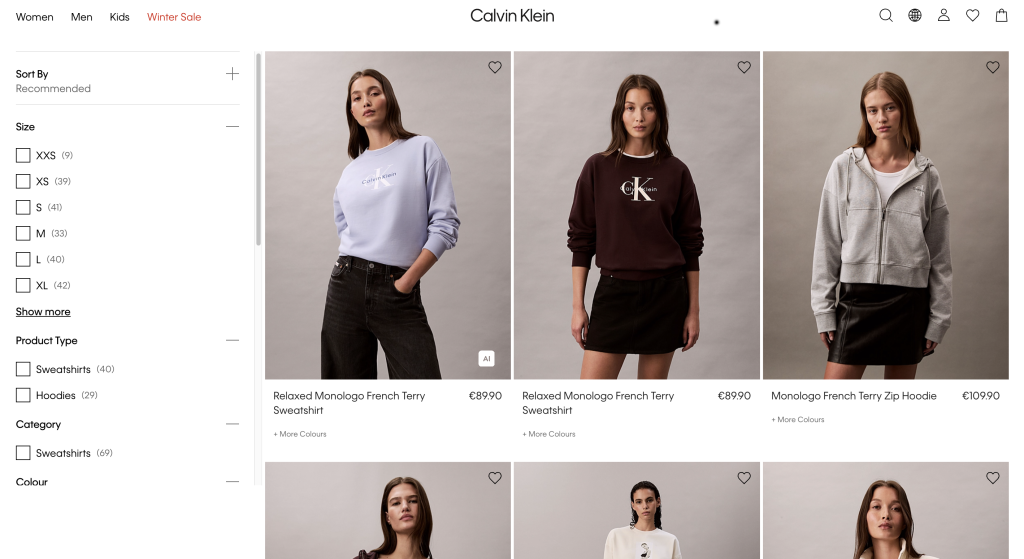
And like this:
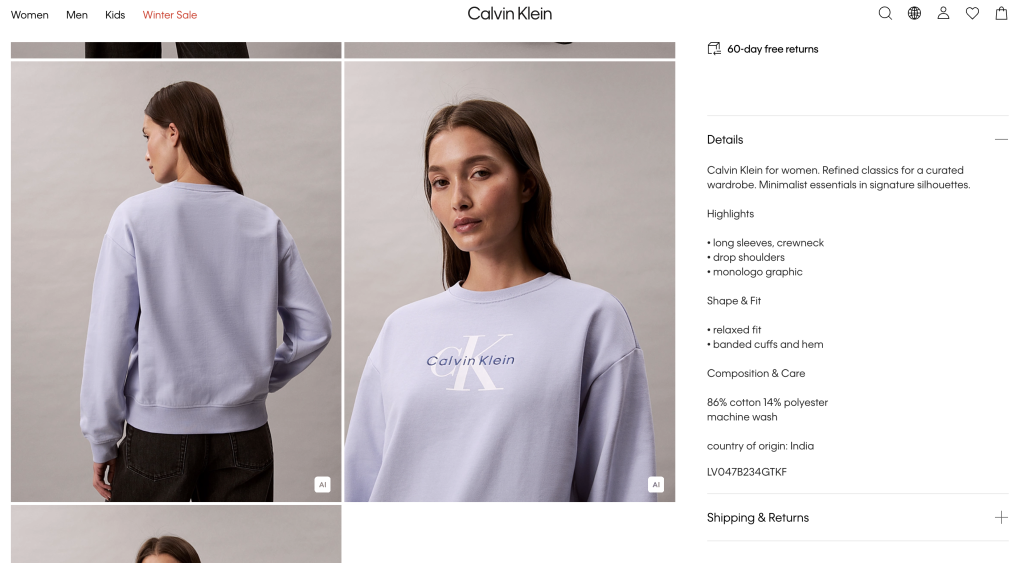
What would this do to the consumer choices, trust, and preference? I’m very curious to see the A/B test on items like this. As nrmitchi said above – if the result is correct, no one would care if it’s AI or not. But, how would our consumer psychology work if we are looking at something that maybe is correct, however, it’s still MARKED as AI. Wouldn’t we think twice? Thinking “Hmm..they mark it as AI because it might deviate from how it actually is?”
It could also take one friend or friend of a friend who “bought an AI-marked item, and it was really off – I don’t trust these images anymore” – however, in reality, it could still be the usual e-com consumer experience, as even photos of the real items don’t always convey how the items will really look ON YOU.
If I were to make predictions and place bets, I think that if we get to the state where marking AI-generated content becomes a must, fashion would need to rethink its usage in direct-to-consumer content. I would imagine that an online shop mixed with real shots and AI shots wouldn’t be the best of ideas, and brands would have to either go all AI and build the trust with the consumer that their AI shots are CORRECT, or keep it “old skool” and keep the craftsmanship of the photoshoot alive.
I do want to witness that “conundrum” even though it might cause some negative impact to my professional plans… But I think it’s an interesting experience that we will all learn from. So… Bring on the markings!!!